
Close
July 19th, 2025
Clean air is not just a comfort; it is a necessity for industrial efficiency and worker safety. Whether you are running a manufacturing plant or managing a workshop, airborne dust can silently degrade both health and machinery. That is where this guide to dust collectors comes in. In this blog, we will explore the benefits of dust collectors, break down the types of dust collectors, and share expert tips for selecting dust collectors focused to your needs. Read on to create a cleaner, safer, and more productive environment.
Airborne contaminants in industrial settings not only threaten worker health but also affect equipment longevity and regulatory compliance. Effective dust collection systems eliminate airborne particulates, reduce health hazards, and enhance indoor air quality (IAQ). For manufacturing plants and workshops, investing in proper air filtration is not just smart it is essential for meeting industrial hygiene and safety regulations.
A dust collector is an air purification device that captures, filters, and removes dust from industrial processes. These air-cleaning systems are vital for maintaining clean work environments, preserving machinery, and ensuring worker protection. They use filters, fans, and collection bins to control and manage airborne dust in everything from small workshops to large production lines.
The benefits of dust collectors include cleaner air, safer workspaces, longer equipment life, regulatory compliance, and improved overall productivity in industrial environments.
Dust collectors significantly reduce respiratory risks by removing harmful particles from the air. This promotes a healthy work environment and ensures workers are protected from long-term exposure.
Modern systems support OSHA compliance and meet environmental protection regulations, helping industries avoid fines and legal complications while fostering safe operational practices.
By preventing dust build up inside machines, collectors reduce wear and tear, lower maintenance costs, and improve overall equipment reliability.
Clean air promotes better focus and fewer sick days, leading to enhanced workflow efficiency and higher productivity across the facility.
Combustible dust is a serious hazard in many industries. Dust collectors minimize explosion risks by safely containing and managing flammable particles, thus adhering to industrial fire safety protocols.
There are different types of dust collectors designed to handle various dust control needs across industries, each offering unique features to suit specific materials, volumes, and environments. Therefore, it is important to analyze the guide to dust collectors for better understanding.
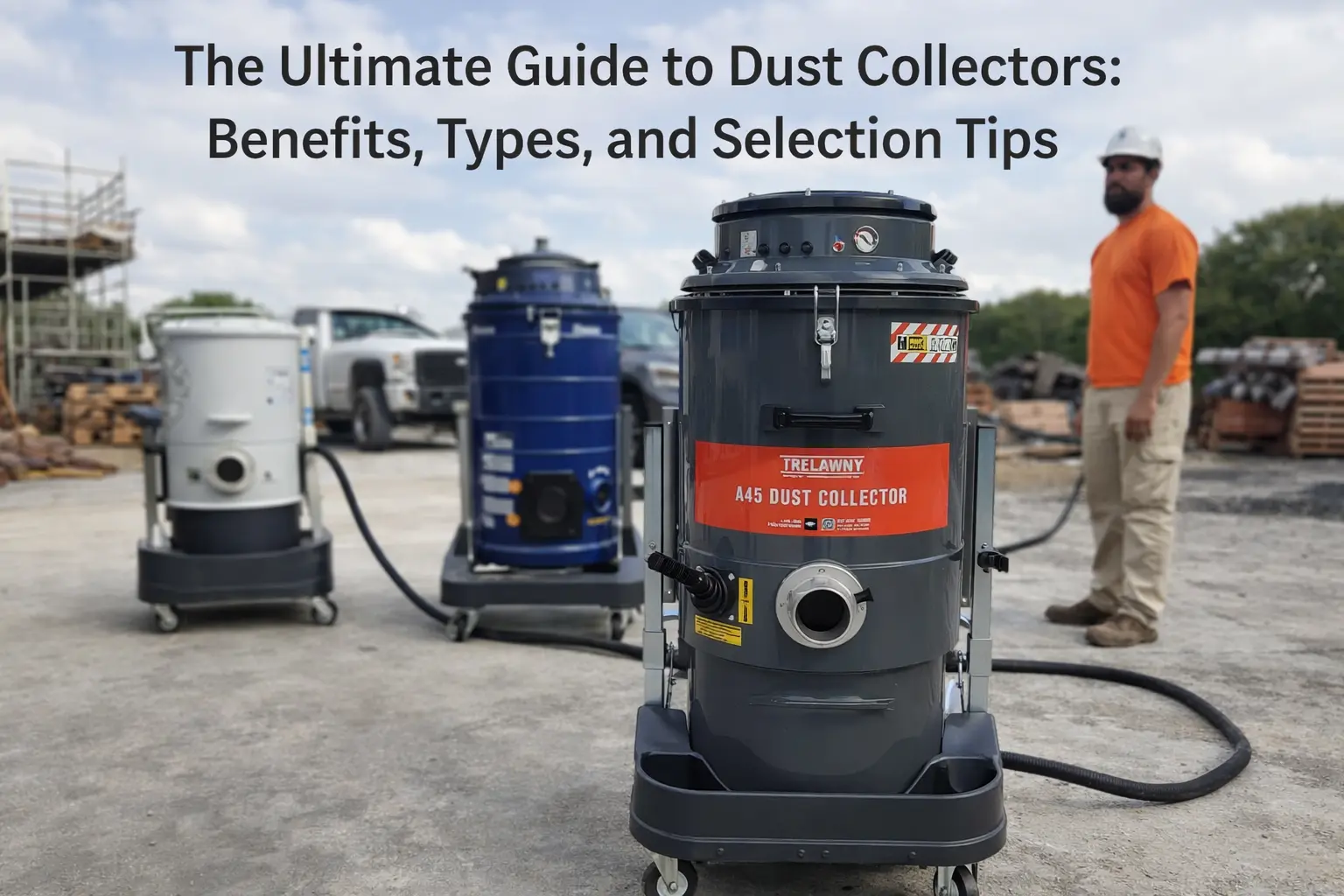
AEMCO’s DUST COLLECTOR – A45 is a compact yet heavy-duty system designed for demanding industrial needs. It features:
This dust-collecting machine is perfect for mobile or localized extraction in tight industrial spaces.
Designed for fine dust filtration, cartridge systems are popular in pharmaceutical, welding, and powder coating applications. They offer high-efficiency pleated filters and compact installation options.
Known for their fabric bag filtration, baghouse units are perfect for large dust volumes in cement, woodworking, and chemical industries. They support pulsejet cleaning and shaker systems.
Cyclone systems use centrifugal force to separate heavy dust particles before filtering. They are effective as pre-filters and work best in woodworking, metalworking, and grain handling.
These use liquid to capture explosive or hazardous dust, ideal for metal finishing or processes involving chemical fumes and spark risks.
Making an informed choice begins with understanding key tips for selecting dust collectors, such as evaluating dust type, airflow requirements, filtration efficiency, and overall system compatibility with your workspace.
Different dust requires different handling. Understand particle size, combustibility, moisture content, and abrasiveness before selecting a collector.
Ensure your collector matches the dust volume. Calculating proper CFM (Cubic Feet per Minute) avoids underperformance and system strain.
HEPA and MERV ratings define a filter’s ability to trap fine particles. For sensitive environments, opt for high-efficiency filters with proven certifications.
Choose systems with low energy consumption and sustainable features to reduce long-term operational costs products stand out in this aspect.
Consider your facility layout and ensure the unit fits without disrupting workflow. Many modern systems offer modular, compact designs.
Select collectors with easy-to-replace filters, self-cleaning mechanisms, and low maintenance schedules to keep downtime to a minimum.
This guide to dust collectors highlights their essential role in creating cleaner, safer, and more productive industrial environments. From choosing the right system to understanding your specific dust collection needs, every step improves worker health, equipment longevity, and regulatory compliance. With diverse options and powerful solutions like AEMCO’s DUST COLLECTOR – A45, you can find the perfect match for your operation.
Are you looking for a reliable paint equipment supplier or a trusted partner for your dust collection needs in Saudi Arabia?
Contact AEMCO today for expert guidance and top-tier solutions.

CEO
I’m Larson Vellara, a professional with 25 years of experience in the Construction Equipment industry, having worked with top brands like Hilti, Makita, Graco, Trelawny, and Lissmac. I have held key roles, including CEO, Business Development Manager, Product Manager, Trade Manager, Assistant Marketing Manager, Regional Training Manager, and Divisional Manager, specializing in strategic leadership and market expansion. With a Postgraduate Diploma in Training & Development and an MBA in Marketing & Finance, I am passionate about driving growth and innovation. Recognized as Best Debater and Elocutionist in school, I value communication and continuous learning in my professional journey.