

Close
July 19th, 2025
Polyurea coatings have become a cornerstone in high-performance industrial applications due to their exceptional durability, rapid cure times, and resistance to extreme environmental conditions. The properties that make polyurea so effective. However, they introduce some unique safety challenges during application. From chemical exposure to mechanical hazards, every aspect of the process demands informed and proactive risk management. In this blog, we will explore the essential safety tips for Polyurea Coating Equipment every professional should follow to ensure a safe, compliant and efficient polyurea application protecting not only your workforce but also the quality of your results.
Safety is considered as the paramount in polyurea spraying due to the significant risks posed by its chemical composition and application process. Polyurea systems involve reactive components such as isocyanates and amine hardeners, which can cause skin and eye irritation, respiratory issues and even long-term health problems if inhaled or absorbed repeatedly making adherence to OSHA exposure limits critical. The use of high-pressure spray equipment introduces the danger of accidental injection injuries, while the rapid curing and exothermic reaction can lead to thermal burns if proper protective measures aren’t taken. Recognizing these polyurea chemical hazards and prioritizing polyurea coating equipment safety tips is essential for maintaining operator safety and ensuring a compliant, controlled work environment.
Proper PPE is essential when applying polyurea to protect against chemical and physical hazards. Respiratory protection is critical, cartridge respirators may suffice for light work, but supplied-air respirators are preferred for high-exposure tasks. As a spraying equipment precautions, full protective clothing like a Tyvek suit, nitrile gloves and ANSI Z87.1-rated safety goggles safeguard the skin and eyes from isocyanates and amines. It’s also advisable to wear hearing protection in noisy settings. High-quality gear such as a 3M respirator ensures safety and compliance throughout the application process.
Maintaining proper ventilation is crucial when applying polyurea coating. As a safety tips for Polyurea Coating Equipment, it significantly reduces the risk of toxic inhalation and potential fire hazards. Whether working in a confined indoor space or an open environment, ensuring continuous air movement through exhaust systems and fresh air supply is essential. In enclosed settings, using negative pressure systems, HEPA filters, and compliant spray booth ventilation helps maintain safe air quality levels in line with OSHA standards. Effective ventilation not only protects applicators but also ensures regulatory compliance and a controlled, hazard-free workspace.
For both application quality and worker safety, polyurea components must be handled, mixed, and stored properly. To avoid deterioration and unintentional reactions, isocyanates and amine resins need to be kept in temperature-controlled, sealed metal barrels. For isocyanates in particular, moisture control is essential since exposure can result in a hazardous pressure buildup. Every container needs to be properly labelled, arranged, if necessary, stored in a flammable storage cabinet. SDS documents must also be available, and emergency action plans and spill kits must be available to handle unintentional exposure or leaks. As a protective measure for coating equipment, adhering to these chemical storage recommendations guarantees adherence and lowers the possibility of dangerous situations.
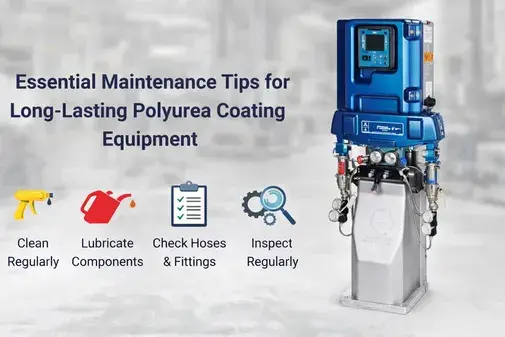
The Graco Reactor and other polyurea painting equipment require routine maintenance and inspection in order to operate safely and effectively. Checking for wear or obstructions in the mixing chamber, hoses, connections, and nozzles should be part of the daily and weekly routine. Maintaining an eye on temperature and pressure gauge settings helps guarantee peak performance and avoid equipment breakdown. After every usage, meticulous cleaning protocols preserve spray quality and prolong equipment lifespan. For operator safety, it’s important to confirm that pressure relief and emergency shut-off systems are operating as intended. Following a rigorous maintenance schedule for polyurea sprayers reduces downtime and improves overall safety compliance.
Implementing safe application techniques is essential throughout the polyurea spraying process. Begin with a thorough pre-job safety briefing to align the team on hazards, equipment and emergency procedures. Overspray and exposure can be reduced with proper job site preparation, which includes masking and protecting the area. Use controlled spray techniques, maintaining appropriate distance and utilizing tools like a trigger lock for consistent flow and safety. Monitor the surface temperature with a reliable gauge to ensure optimal curing conditions, and maintain a safe perimeter during the curing phase to avoid inhalation risks. Prioritizing polyurea application safety at every stage ensures a smooth, compliant and high-quality application.
To safeguard the environment and ensure worker safety, polyurea applicators must follow stringent regulatory guidelines. PPE use and safe equipment operation are among the workplace safety criteria outlined in OSHA 1910. VOC emissions are governed by the EPA’s 40 CFR regulations, which call for cautious handling and application procedures to reduce their negative effects on the environment. Adherence to ANSI safety requirements, thorough SDS documentation and appropriate waste disposal are further components of compliance. Maintaining a responsible and compliant workplace requires understanding and adherence to these EPA VOC criteria and OSHA polyurea regulations.
Many polyurea application risks stem from avoidable mistakes that compromise both safety and coating quality. Skipping PPE such as respirators and protective clothing, exposes workers to harmful chemicals and violates safety standards. In enclosed locations, poor ventilation raises the risk of inhalation and fire threats. Coating failure, blocked gun tips and expensive rework might result from using incorrect mix ratios. Additionally, if pre-use inspections are neglected, leaks or pressure problems are frequently missed. Polyurea spray operations can be made safer and more dependable by avoidable coating risks with proper training, regular inspections and rigorous adherence to safety procedures.
Proper training and certification are essential for anyone operating polyurea coating equipment, ensuring both working excellence and safety practices for polyurea application. Accredited programs such as those offered by the Polyurea Development Association (PDA) or through online certification platforms, provide critical knowledge on equipment use, PPE protocols and hazard management. Regular refresher courses and in-house safety drills help reinforce best practices and keep teams up to date with evolving standards. As one of the polyurea coating equipment safety tips, investing in polyurea applicator training not only reduces risks but also builds a culture of safety and professionalism in the workplace.
For enhanced safety and performance, seasoned professionals offer key insights that go beyond the basics. Use instruments such as moisture meters when spraying polyurea in extremely hot or cold temperatures to prevent thermal stress and adhesion problems. Check the spray gun for wear and calibrate your ratio check device on a regular basis to guarantee consistency in the spray pattern. Depending on your project environment for choosing the appropriate equipment like the Graco XP reactor can significantly increase productivity and lower risk. In addition to increasing efficiency, these professional polyurea spraying tips provide safe, superior application techniques.
No. Spraying polyurea without a full respirator is unsafe due to the presence of hazardous chemicals like isocyanates. A certified respirator is essential to prevent inhalation risks.
Moisture exposure, especially to isocyanates, can cause foaming, pressure buildup and compromised material performance. Always store components in sealed containers with moisture control.
Yes, but only with proper ventilation. Using exhaust systems and air movement controls is crucial to reduce inhalation risks and maintain safe indoor air quality.
Follow EPA and local hazardous waste regulations. Unused materials should be stored in properly labelled containers and disposed of using approved methods, as detailed in SDS documentation.
These PPE Q&A can address your common coating safety queries and help ensure responsible and compliant use of polyurea spray systems.
Implementing proper Safety Tips for Polyurea Coating Equipment is a critical part of achieving high performance results. From using the right PPE and ensuring proper ventilation to maintaining equipment and following a detailed coating schedule sheet, each step plays a role in minimizing risk. Regular training, daily safety logs and having emergency contact info on hand are essential elements of a comprehensive polyurea coating equipment checklist. By prioritizing safety, planning and continuous education, applicators can work more efficiently and responsibly. For authentic Graco equipment, accessories and expert support, trusted paint equipment suppliers like AEMCO in Saudi Arabia are your go-to partners for reliable solutions.

CEO
I’m Larson Vellara, a professional with 25 years of experience in the Construction Equipment industry, having worked with top brands like Hilti, Makita, Graco, Trelawny, and Lissmac. I have held key roles, including CEO, Business Development Manager, Product Manager, Trade Manager, Assistant Marketing Manager, Regional Training Manager, and Divisional Manager, specializing in strategic leadership and market expansion. With a Postgraduate Diploma in Training & Development and an MBA in Marketing & Finance, I am passionate about driving growth and innovation. Recognized as Best Debater and Elocutionist in school, I value communication and continuous learning in my professional journey.